DMARC Network Analysis
The Challenge: The DMARC Food Pantry Network generates a massive dataset of transactional visitor logs. However, the data was unstructured and lacked the demographic context needed to make informed decisions about resource allocation and new pantry locations.
The Solution: I built a reproducible data pipeline in R that cleaned raw logs, enriched them with ACS Census data, and utilized predictive modeling. This analysis provided DMARC with actionable insights into seasonal trends, shifting demographics, and geographic service gaps.
Data Standardization Pipeline
The first step involved ingesting raw transaction logs from over 90 pantry locations. I wrote a cleaning script to standardize variables, calculate visitor ages from birthdates, and bucket income levels according to Federal Poverty Guidelines. This created a "universal" dataset ready for downstream analysis.
# 3c: Fixing age from DOB
data <- data %>%
  mutate(
    dob = ymd(dob),
    served_date = ymd(served_date),
    age = round(as.numeric(difftime(served_date, dob, units = "days")) / 365.25)
  ) %>%
  filter(age > -0.1, age <= 102)

# 4a: Binning Income into Federal Poverty Brackets
data <- data %>%
  mutate(
    fed_bracket = case_when(
      poverty_level == 0   ~ "0",
      poverty_level <= 25  ~ "0 - 25",
      poverty_level <= 50  ~ "25 - 50",
      poverty_level <= 100 ~ "50 - 100",
      TRUE ~ "Over 100"
    )
)Geographic Visit Density
I utilized Leaflet to map the density of repeat visitors across Central Iowa. The analysis revealed that while Des Moines proper has high engagement (up to 8.2% of the population in certain zip codes), there is significant variation in the suburbs, with areas like Urbandale and Windsor Heights showing distinct utilization patterns.
# Create the Leaflet map
leaflet_map <- leaflet(iowa_map_data) %>%
  addPolygons(
    fillColor  = ~pal(individual_density * 100),
    color      = "grey80",
    weight     = 0.4,
    fillOpacity= 0.3,
    label = ~paste0(
      ifelse(individual_density > 0,
             sprintf("%.1f%%", individual_density * 100),
             "No Data")
    )
  ) %>%
  addProviderTiles(providers$CartoDB.Positron)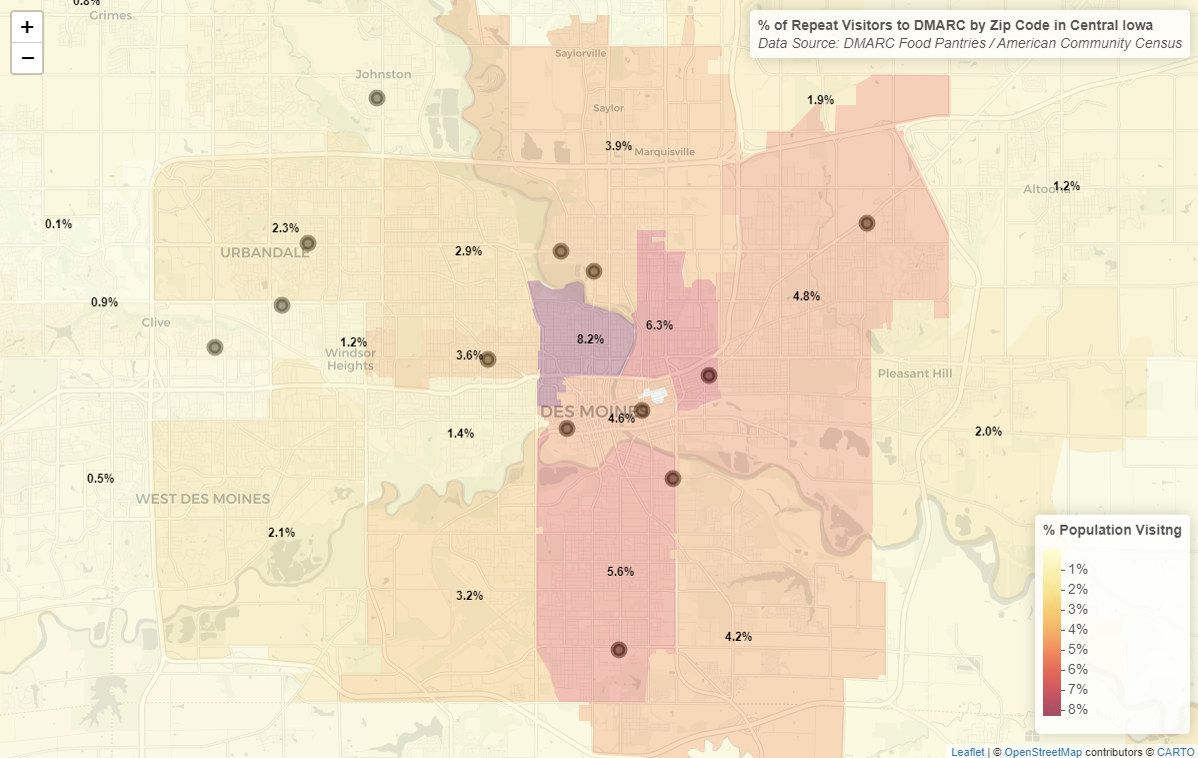
Time-Series Forecasting
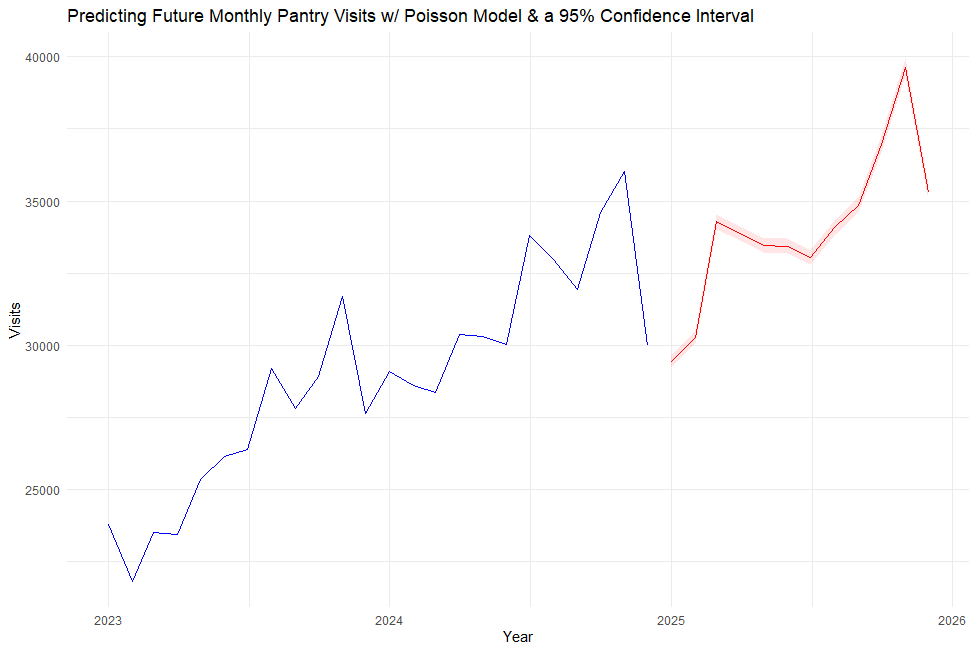
To help DMARC prepare for future demand, I developed a Poisson regression model combined with Generalized Additive Models (GAMs) to forecast monthly visits. The model accounts for seasonal trends and predicts a continued rise in pantry usage, estimating a new peak of approximately 40,000 monthly visits by late 2025.
# Fit GLM with seasonal factors
glm_fit <- glm(
  total_visits ~ time_index + factor(month) + avg_age + avg_household,
  data   = monthly_data,
  family = poisson()
)
pred <- predict(glm_fit, newdata = future_df, type = "link", se.fit = TRUE)
future_df <- future_df %>%
  mutate(
    predicted_visits = exp(pred$fit),
    lower = exp(pred$fit - 1.96 * pred$se.fit),
    upper = exp(pred$fit + 1.96 * pred$se.fit)
  )
Analyzing Demographic Shifts
By comparing visitor data from 2018 to 2024, I identified the fastest-growing demographic groups accessing DMARC services. The data shows that Hispanic families (specifically adults and minors below the poverty line without SNAP benefits) have nearly doubled their visit share, rising from roughly 4% to 8% of the total visitor base.
# Recode demographics for comparison
current_recode <- current %>%
  mutate(
    acs_demo_ext = paste(acs_age_group, acs_race, acs_snap,
                         acs_poverty, acs_household_structure, sep = " | ")
  )
top_growth <- type_changes %>%
  slice_max(order_by = change, n = 5)
ggplot(top_growth, aes(x = reorder(acs_demo_ext, change), y = change)) +
  geom_col() + coord_flip()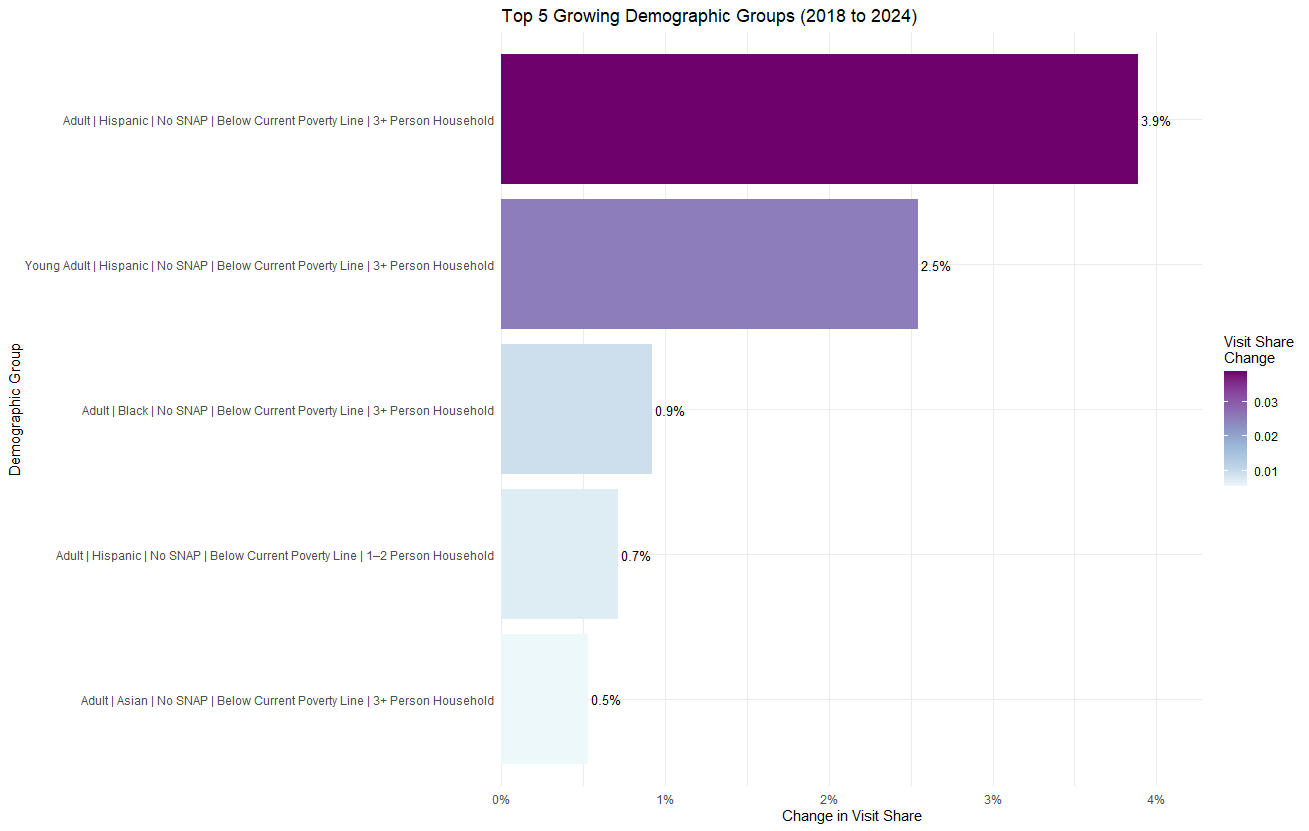
Strategic Gap Analysis
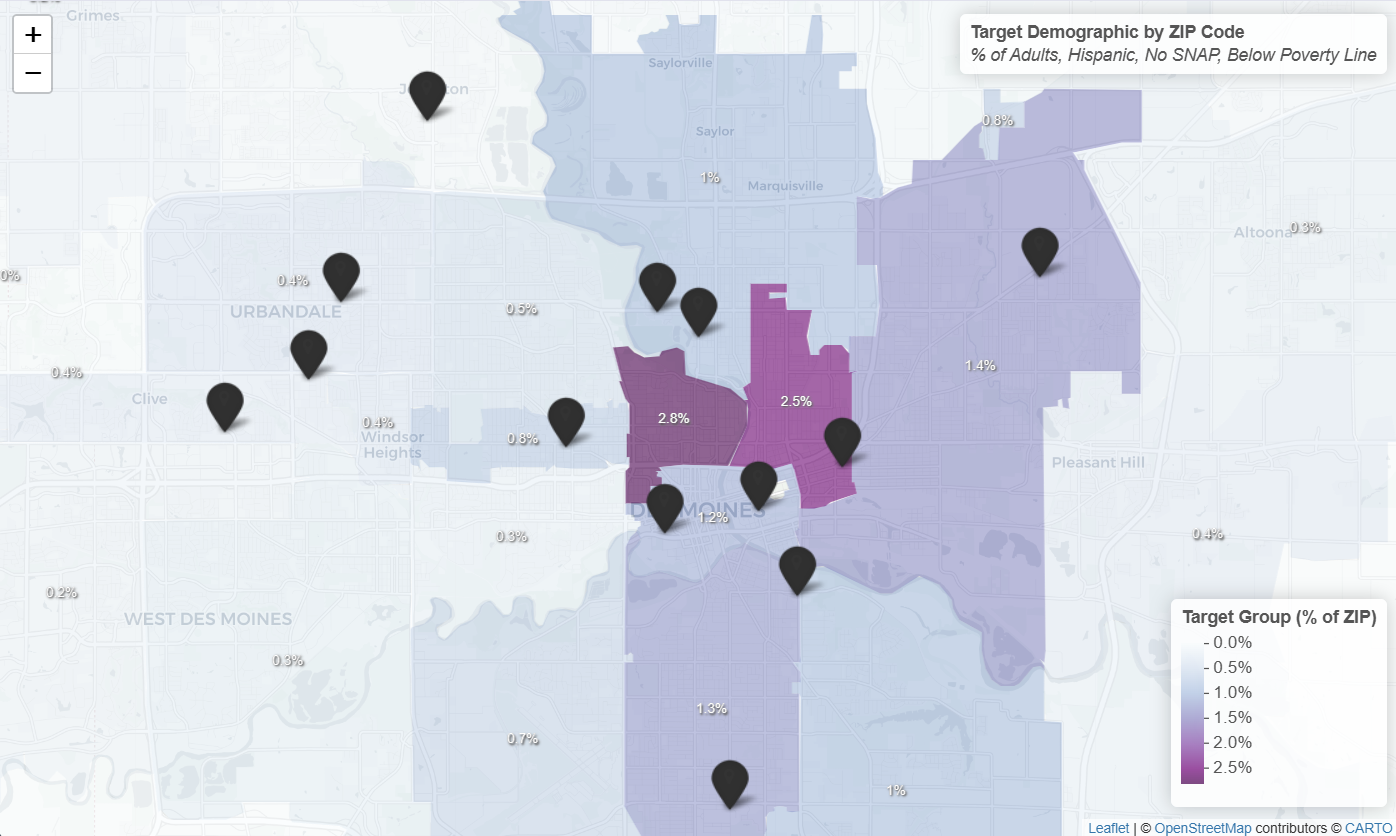
Finally, I performed a gap analysis by overlaying ACS Census data onto the pantry network map. I calculated the density of the "Target Demographic" (Hispanic adults, No SNAP, Below Poverty) per zip code. This revealed underserved "hotspots," particularly in the River Bend area, where the target population density is high (approx. 2.8%) but pantry coverage is low.
# Calculate Target Group Density
acs <- acs %>%
  mutate(
    target_group_count = round(
      total_pop * combined_adult_prop * hispanic_prop * (1 - snap_rate) * poverty_rate
    ),
    target_group_density = target_group_count / total_pop
  )
iowa_map_data <- iowa_zips %>%
  left_join(acs, by = c("zip" = "ZIP")) %>%
  filter(!is.na(target_group_density))